
Lillehammer knödel and mammoth ivory.
Summer of 2018 brought an endless heatwave, with every weekend, starting from May calling for another ride, and one more. By the end of June I felt that I had been on every route and trail in my neighbourhood. I also often had to follow the same track back as I started in the morning. It was time to look further.
Another of these sunny mornings in July I left my home by Hamar, in the eastern part of Norway. It was time to head for Lillehammer, but instead of turning back home in the afternoon I would continue up Gudbrandsdalen. I had this idea that I should be able to reach at least to Geirangerfjorden, one of the deep fjords to the west of the mountains.
I would travel light and managed to get a pair of socks, underwear and even a couple of shoes in my tiny gym bag, to carry on my back. A bottle of water was placed in the frame and some tools under the back of the seat. It was time to leave.
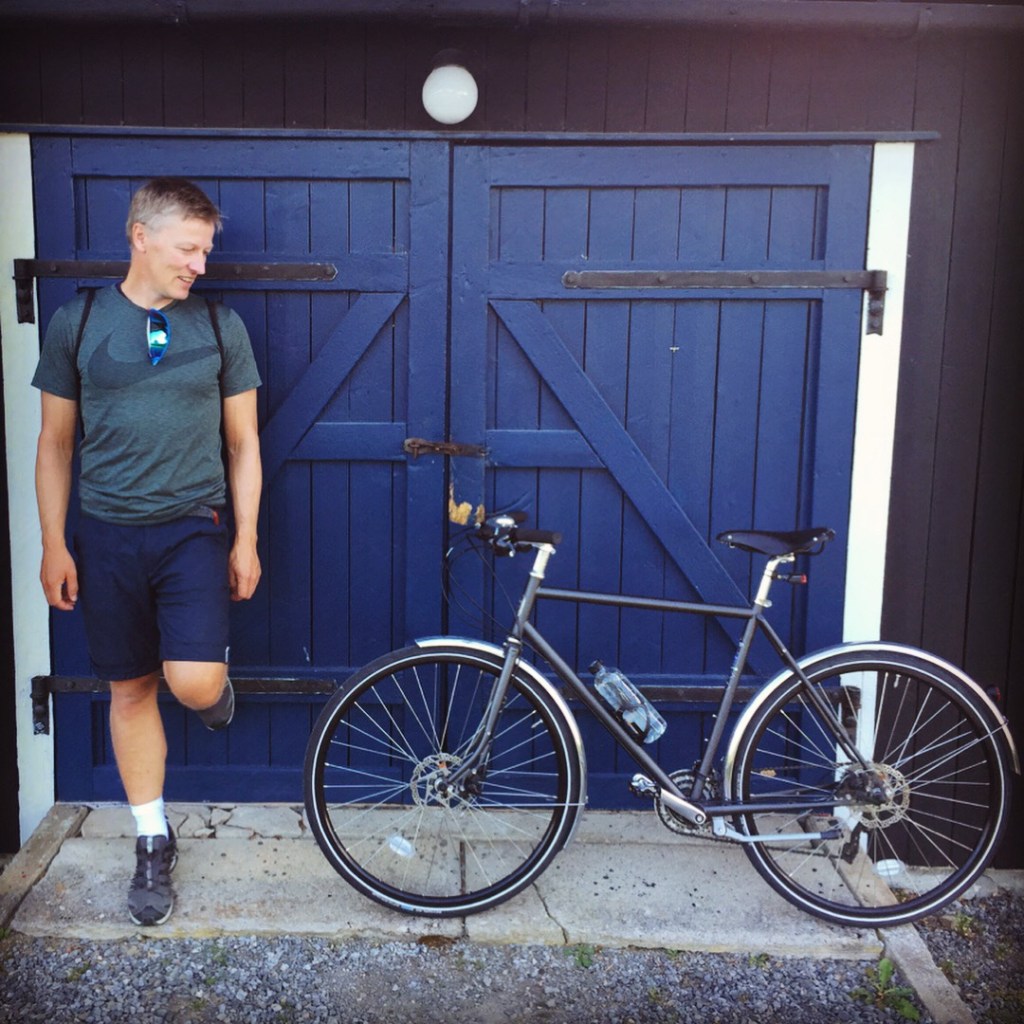
The first stage was known to me already, rolling in a farmland landscape in the hills along Lake Mjøsa. In picturesque Lillehammer it was time for a refill from Kafé Sorgenfri. This is a Austrian run place for schnitzels, knödel and giant apfelstrudels. This should keep me going.
The Gudbrandsdal Valley is one of the main routes for traffic, with E6 and the railway aligning the river. To get away from the main road filled with Swedish caravans, German motor homes and Czech tour buses, I had to follow the backside road. This is not always paved, it turns left, right, up and down. But it offers calm, some great views and a different angle to places I’ve seen some times before.

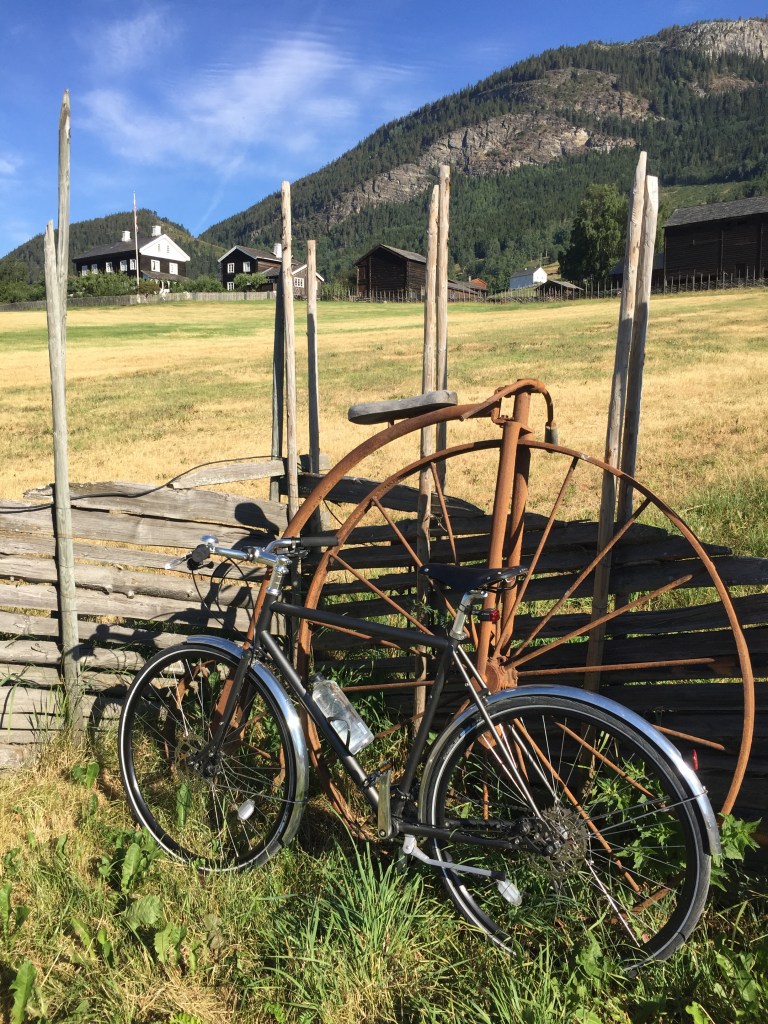
The valley is filled with traditional farm buildings, a couple of stave churches and all you can expect from rural Norway. Though there where some surprises, like the Liberty Statue outside a diner, and the giant ivory horns from a mammoth, that actually where made of steel. The other strange thing this summer was the drought. This is usually a green and lush landscape with water in streams and waterfalls everywhere. But it seemed like everything had stopped growing and the fields where brown. The farmers had started planning to slaughter their cattle, as they couldn’t feed them anymore. Was this the result of climate change, or just a one time experience?
For the last leg of my first day on tour I didn’t find an easy route from looking at the map. It was either to follow the flow on the motorway or climbing 800 meters up Kvitfjell. I chose the latter, though this was the end of the day on one of my longest rides ever. Kvitfjell was one of the downhill skiing arenas from the 1994 Lillehammer Winter Olympics. And it was easy to imagine how fast it would be to go downhill as I climbed the serpentine road nearby. This was not what I needed now.
I had calculated approximately how far I would get up the valley the first day. And I had booked a night at the mediaeval farm Sygard Grytting. I had noticed this place from car or train through the years. Now it was time to do a stopover. I had even booked a full meal upon arrival. But climbing the long hill I was hungry, thirsty, dreaming of a Coke, which I usually never drink. I was anxious I wouldn’t get to the farm in time for food.
There was no time to enjoy the surroundings anymore. It was just pedalling to get there in time. Being in a hurry also led me on some dead ends, which didn’t actually help.
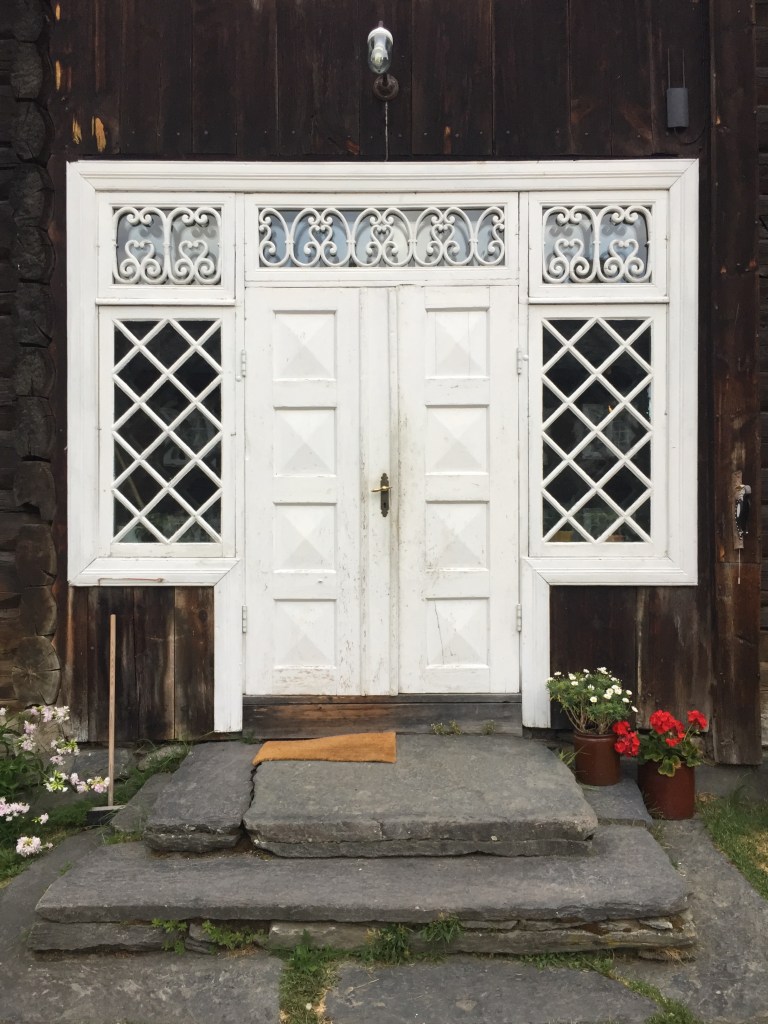
I did make it in time. Arriving at a mediaeval farm, being greeted by hosts carrying centuries of tradition and seated among pilgrims. It was an unforgettable experience. The farm houses placed around a courtyard were beautiful. They had even managed to hide solar panels made as a tiled on the roof of one of the buildings.
The place was great, the people, the room. It was just the heat during night, and the sound of trailers pulling up the highway that kept me awake.
The map above shows the whole tour.
 velono
Leave a comment